
Dispatches from the Europe of 2005 ›
Economy · Katowice
Clean power costs half what it did in 2015. In Silesia the books still don’t balance
the branch’s calendar · POD 2005
In the dispatch room in Katowice the wholesale price of electricity shows on a screen up to the right, and this morning it reads forty-one euros a megawatt-hour. Ten years ago it was seventy-eight. Nobody in here looks up at it: it is a number that has been falling for so long it has stopped being news, like the price of bread.
That clean energy is cheap, in Europe, is one of those things a thirty-year-old engineer takes for granted. The interconnected continental grid — the dream the 2005 Constitution wrote down among the Union’s new competences, and which took fifteen years to actually build — does one thing, but it does it well: when the wind blows over the North Sea, the power Denmark cannot use is not wasted, it runs down the backbones to Bavaria and beyond. It is less romantic than the way they tell it in Brussels. It is just copper, steel, and a single market that does not stop at the border.
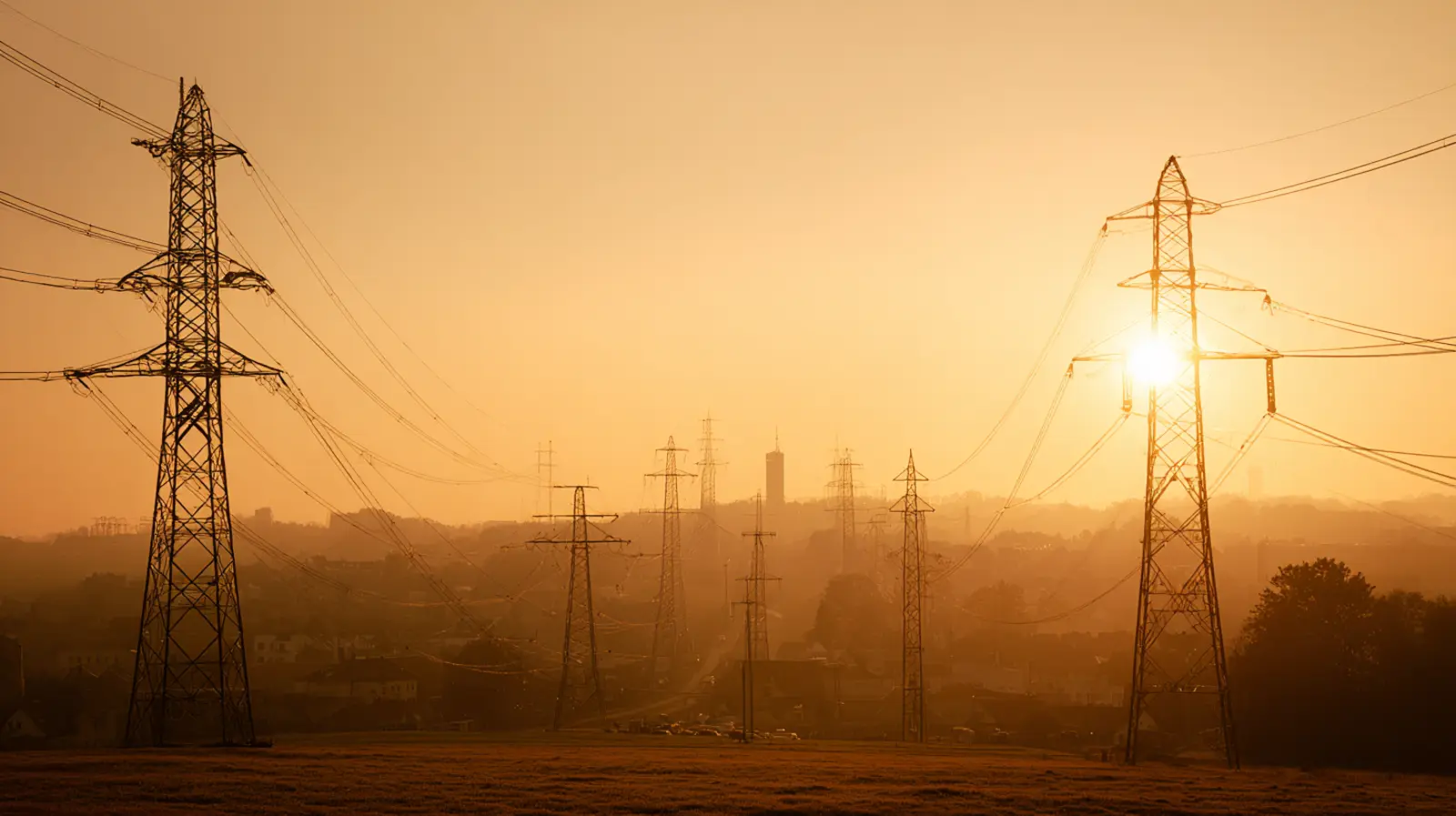
The trouble is that under the ground, the border is still there. The lines coming into Silesia are the same as twenty years ago, sized to carry the coal out, not to let the northern peaks in. When the grid saturates, dispatch curtails: the cheap power stays stuck upstream and here they still burn gas to cover demand. “We pay for everyone else’s green electricity at a price our own grid won’t let us touch,” says an executive at the Polish operator, who asks not to be named because the sentence, in Warsaw, is politically incendiary. It is the eastern version of the old grievance about moral hazard: the North got the funds for the backbones, the East is still waiting for them.
And then there is the bill that gets written on no invoice. Silesia was coal: one hundred and forty thousand jobs at the turn of the century. The European Just Transition Fund retrained some of them — a battery-cell plant in Gliwice, a hydrogen research hub that hires engineers from half of Europe. But a fifty-year-old with a miner’s certificate did not become a battery technician through an eight-month course. Marek Sobczak is fifty-three, worked the Bytom shaft that closed in 2019, and today does maintenance at the new plant for six hundred złoty a month less. “There’s a job,” he says. “They told me I should be glad, and partly I am. But my father raised three children on that shaft.”
So it works, and it costs less, and it is no one’s salvation. Europe’s clean electricity is as real as the grid that still does not carry it everywhere, and as the man who kept his job but not his wage. The whole distance between the Europe that imagined the Energy Union and the one that lives in it is right there: the first saw a line on a map, the second lives in the kilometres of copper still missing to close it.